 Thermal Cascade
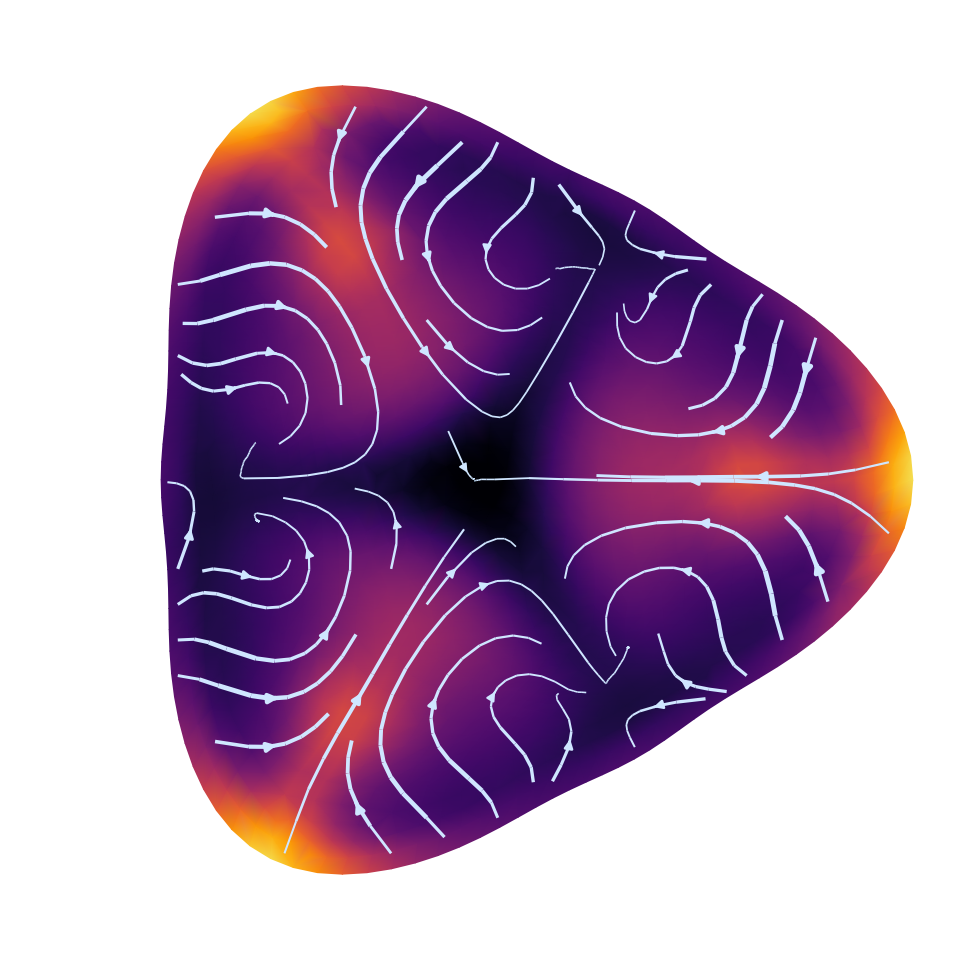
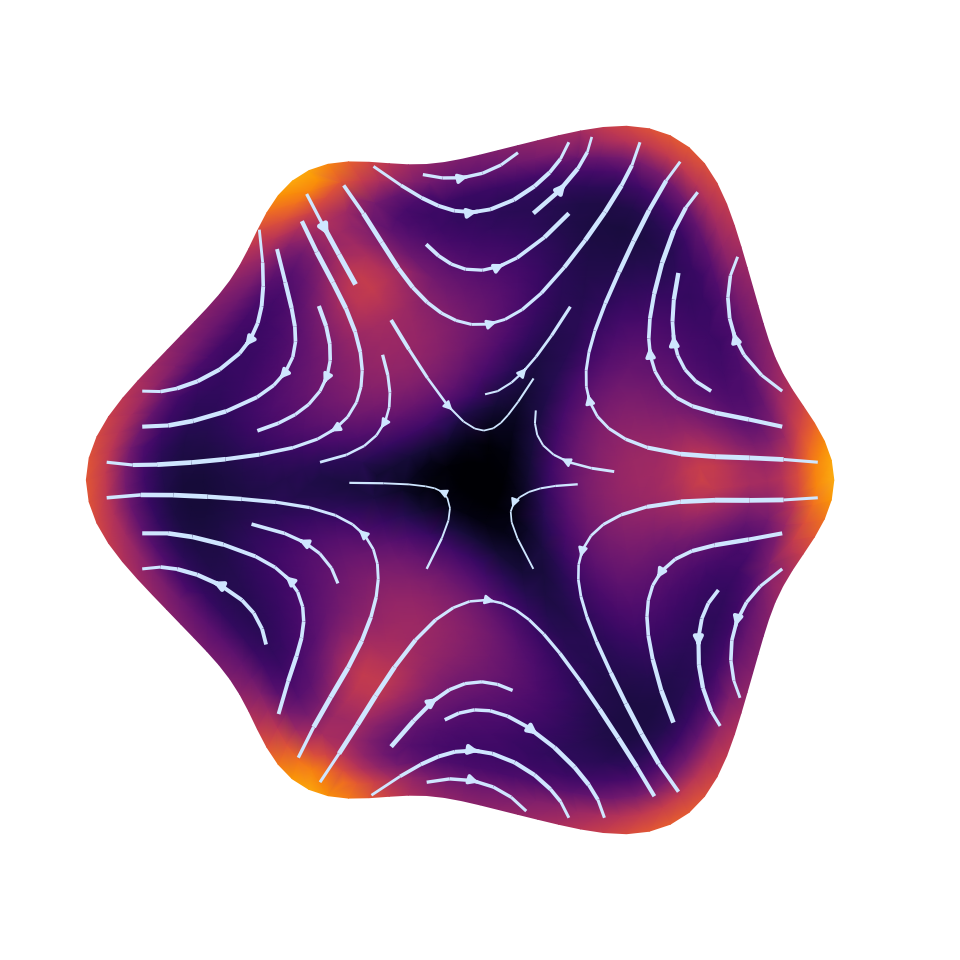
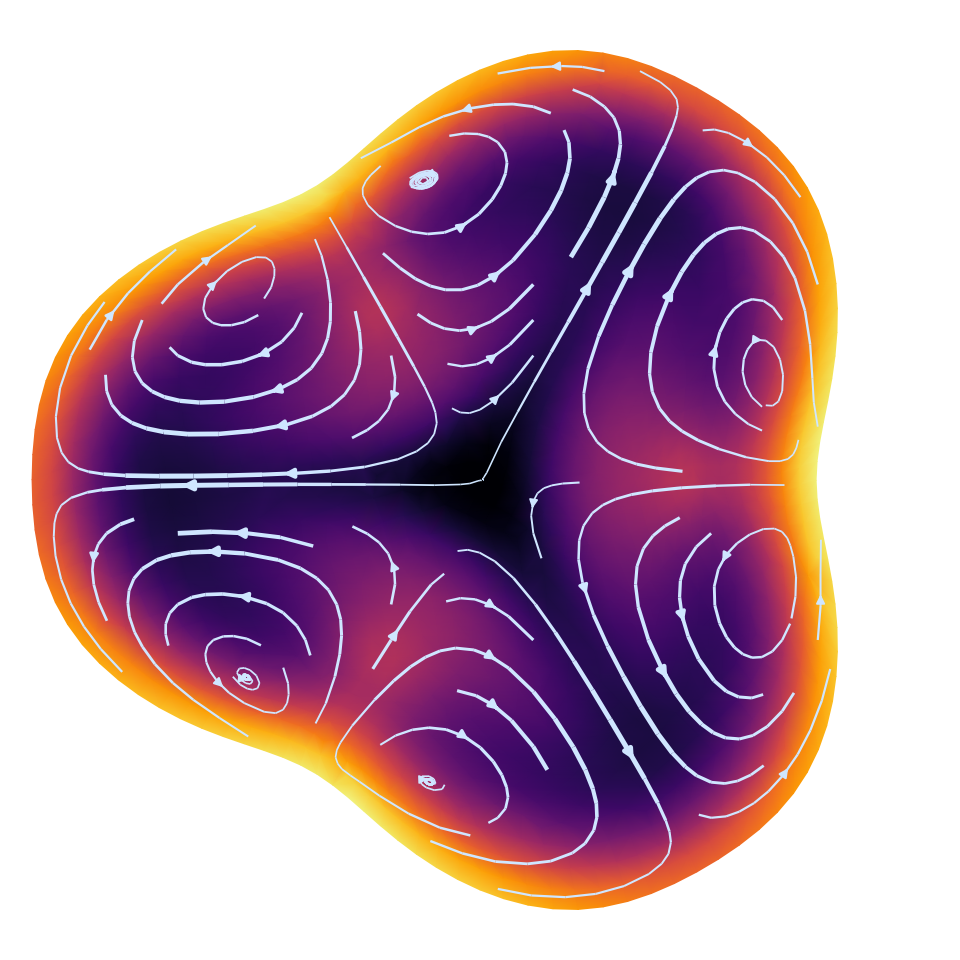
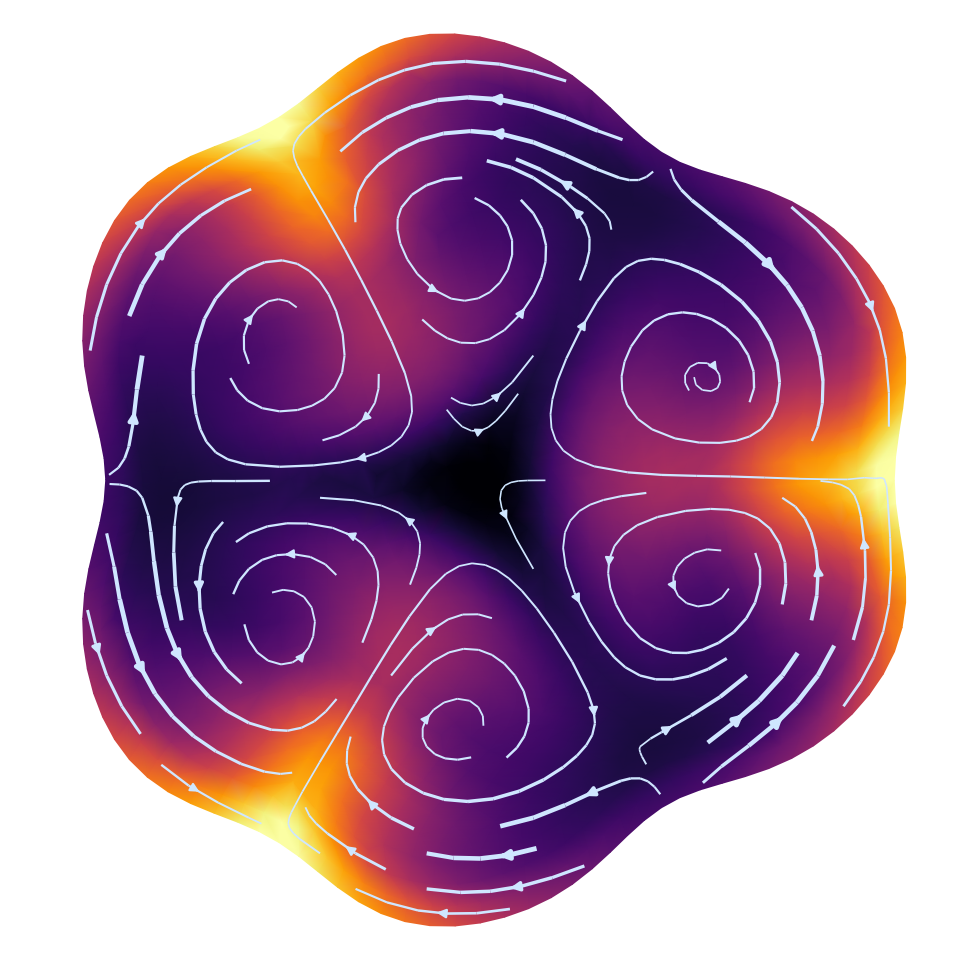
Our laminar heat exchanger design
Designed for viscous liquids, the rocking tube drives a constant exchange of liquid between the wall and the core of the tube.
- Developing Thermal Cascade's design engine for passive mixers and heat-transfer walls.
- Rocking-wall tube family: Australian provisional application filed.
- Oscillatory flow reactor: Australian provisional application filed.
Performance
The lobed wall re-energises the rotational component of flow through the alternating cross-section, whilst carrying no net twist in the pipe. The tube is designed to be pressed or swaged from a round tube. More complex or deeper versions are printed.
Improved thermal performance per metre of tube translates to shorter tubes for the same duty. Other benefits, such as fouling reduction from improved circulation, are currently untested.
We are looking for one forming partner to make a 300 mm trial length and measure it with us.
Thermal performance factor at Re 1000
Re 1000, Pr 7, laminar; every bar from the same numerical chain. TPF = (Nu/Nu0)/(f/f0)1/3 at equal Reynolds number, Nu per unit wall area. Computed (CFD) and stated in the filed application; to be measured in metal.
The rocking tube against each device at Re 600, 1000 and 2000
| relative to | Re 600 | Re 1000 | Re 2000 |
|---|---|---|---|
| plain tube | 4.8–5.0× | 5.8–6.5× | 7.2–9.0× |
| twisted-tape insert | – | 1.3× | 1.3× |
| helical static mixer | 1.5× | 1.6× | 1.9× |
| corrugated tube | – | 5.7× | 2.1× |
| one-hand twisted tube, same section | 5.2× | 1.6× | 1.2–1.4× |
Design studies
We also design to order.
You give
- the fluid and its properties
- flow rate and temperature programme
- the passage you have
- how you make it, and its limits (formed tube, printed core, plate stack)
You get
- a wall or core geometry file
- predicted heat transfer and pressure drop against your incumbent, at equal pumping power
- a short report
- a licence to use the design on your line
The design method itself isn't part of the deliverable.
Time and fee
Then a printed or formed test piece, measured together, and a licence or ongoing arrangement if the trial justifies it.
Founder
I'm Joshua Taubman. I trained as a nuclear engineer in France, came back to Sydney, and spent the past year building a design method for flow passages — coupling fluid structure to solid topology. Thermal Cascade grew out of that work and the computational pipelines behind it; the tube wall and the reactor internals are both products of the same process.
Contact
For a forming trial, a design study or a conversation about a duty you have, write to me directly. I reply within two working days.
- joshua@thermalcascade.com.au
- Joshua Taubman
- Where
- Sydney, Australia
- Useful to include
- the fluid, flow rate and temperatures, the exchanger or reactor you have now, and how it is made.